

Analysis of the waterworks treatment process
Category:
Time of issue:2020-06-02
Nowadays, every household uses tap water. The slowly flowing tap water brings us a lot of convenience, but do you know where this tap water comes from? What is the source? And how is it delivered to thousands of households? Today, let's learn about the water treatment process of a water plant together, and let's take a good look at the processes involved in treating our daily tap water.
1 Coagulation reaction treatment
After the raw water is lifted by the intake pump house, it first undergoes coagulation treatment. That is:

2 Sedimentation treatment
The process of separating flocculants formed in the coagulation stage from water by gravity is called sedimentation, which takes place in the sedimentation tank. After the water flows into the sedimentation zone, it is distributed along the entire cross-section of the water zone, enters the sedimentation zone, and then slowly flows to the outlet zone. The particles in the water settle to the bottom of the tank, and the sludge continuously accumulates and concentrates, and is periodically discharged from the tank.
3 Filtration treatment
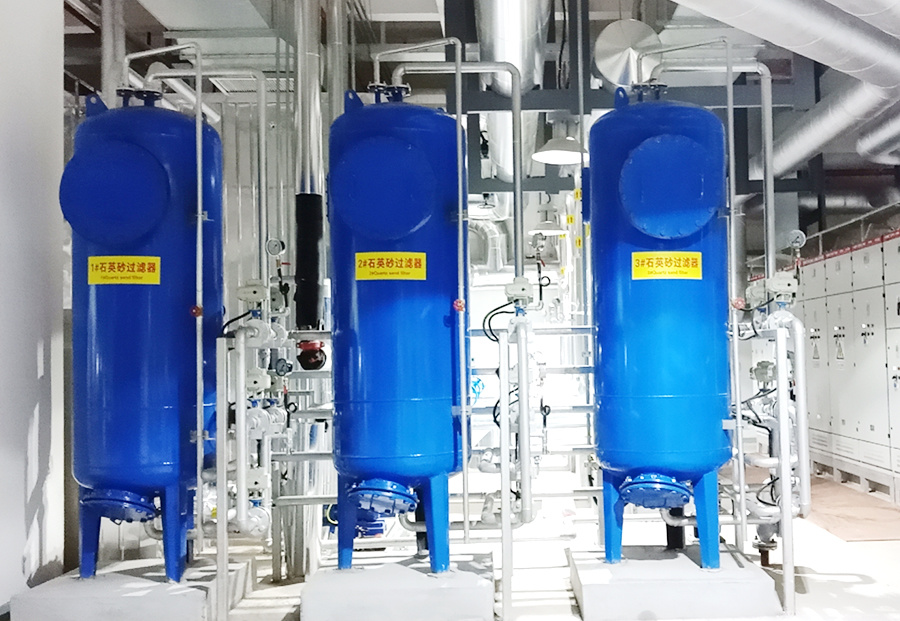
Filtration generally refers to the process of using a granular filter layer with gaps, such as quartz sand, to intercept suspended particles in water through adhesion, thereby further removing small suspended impurities, organic matter, bacteria, and viruses from the water, making the water clearer.

4 Disinfection treatment after filtration
After filtration, the turbidity of the raw water is further reduced, and at the same time, the remaining bacteria and viruses lose the protection or attachment of turbid substances, creating good conditions for disinfection.
Disinfection does not completely eliminate microorganisms, but eliminates pathogenic microorganisms, ensuring that drinking water meets the bacteriological standards for drinking water.
At the same time, disinfection maintains a certain amount of residual chlorine at the end of the city's water pipes to control bacterial growth and prevent pollution.
The amount of chlorine added for disinfection (liquid chlorine) is 1.0-2.5g/m³ This is mainly because hypochlorous acid generated by the reaction of chlorine and water plays an oxidizing role inside bacteria, destroying the bacterial enzyme system and thus leading to bacterial death.
The disinfected water is sent from the clear water tank through the pump house to reach a certain water pressure, and then sent to thousands of households through the water supply network and distribution network.
Tags:
-- Recommended --


Shijiazhuang Tianwang Environmental Protection Technology Co., Ltd.
Shijiazhuang Tianwang Environmental Protection Technology Co., Ltd. is a high-tech enterprise specializing in the research and development, manufacturing and sales of water treatment equipment.
Contact Information
Production address: No. 9, Fengchan Road, Economic and Technological Development Zone, Shijiazhuang City
Office Address: 25th Floor, Block C, No. 310 Changjiang Avenue, Shijiazhuang High-tech Development Zone
Contact Number:
0311-89272359 0311-68039237
Enterprise Email:
twhbkj@163.com
Website: en.sjztwhb.com