
Analysis of Water Treatment Technology
Category:
Time of issue:2021-02-22
Reverse osmosis utilizes a reverse osmosis membrane that selectively allows only the solvent to pass through (usually water ) while retaining ionic substances. Using the transmembrane pressure difference as the driving force, it overcomes the osmotic pressure of the solvent, allowing the solvent to pass through the reverse osmosis membrane to achieve the separation of liquid mixtures, a membrane process.
Reverse osmosis, also known as reverse permeation, is a membrane separation operation that uses a pressure difference as the driving force to separate the solvent from the solution. Because it is opposite to the direction of natural osmosis, it is called reverse osmosis. According to the different osmotic pressures of various materials, a reverse osmosis pressure greater than the osmotic pressure, i.e., the reverse osmosis method, can be used to achieve separation, extraction, purification, and concentration.
1 Reverse Osmosis Process Principles
The principle of reverse osmosis membrane separation technology is described by explaining the following professional terms:
1) Semipermeable membrane: A membrane that only allows solvent molecules to pass through but not solute molecules is called an ideal semipermeable membrane.
2) Osmosis: Under the same external pressure, when a solution and a pure solvent are separated by a semipermeable membrane, the phenomenon of the pure solvent passing through the semipermeable membrane to dilute the solution is called osmosis.
3) Osmotic equilibrium: In the osmosis process, the number of solvent molecules passing through the semipermeable membrane from two opposite directions is equal, that is, osmotic equilibrium is reached.
4) Osmotic pressure: When a semipermeable membrane separates a solution and a pure solvent, the additional pressure applied to the original solution that just prevents the pure solvent from entering the solution is called osmotic pressure. Generally, the more concentrated the solution, the greater the osmotic pressure of the solution.
5) Reverse osmosis: If the pressure applied to the solution exceeds the osmotic pressure, the solvent in the solution will flow towards the pure solvent instead. This process is called reverse osmosis.
Reverse osmosis utilizes a reverse osmosis membrane that selectively allows only the solvent to pass through ( usually water ) while retaining ionic substances. Using the transmembrane pressure difference as the driving force, it overcomes the osmotic pressure of the solvent, allowing the solvent to pass through the reverse osmosis membrane to achieve the separation of liquid mixtures, a membrane process. Its operating pressure difference is generally 1.5 ~ 10.5MPa ,the size of the retained component is 1 ~ 10Å small molecule solutes. In addition, all other suspended solids, dissolved substances, and colloids can be removed from the liquid mixture.

2 Technical Characteristics of Reverse Osmosis Technology
1) Under conditions where no phase change occurs at room temperature, solutes and water can be separated. It is suitable for the separation and concentration of heat-sensitive substances, and compared with separation methods involving phase changes, it has lower energy consumption.
2) Wide range of impurity removal, not only removing dissolved inorganic salts, but also removing various organic impurities.
3) High desalination rate and water reuse rate, capable of retaining solutes larger than several nanometers.
4) Since only pressure is used as the driving force for membrane separation, the separation device is simple, easy to operate, control, and maintain.
5) Reverse osmosis equipment requires the feed water to meet certain indicators to operate normally. Therefore, before entering the reverse osmosis equipment, the raw water must be pre-treated. In order to extend the service life of the membrane, the membrane should also be cleaned regularly to remove fouling.
3 Reverse Osmosis Process Design and Calculation
Typical process flow: A reverse osmosis system generally includes three main parts: pretreatment, reverse osmosis unit, and post-treatment.
Similar to microfiltration and ultrafiltration processes, good pretreatment is essential for the long-term stable operation of the reverse osmosis unit.
Its main purposes are:
a. Removal of suspended solids and colloids, reducing turbidity;
b. Control of microbial growth;
c. Inhibition and control of slightly soluble salt deposition;
d. Adjustment of feed water temperature and pH value;
e. Removal of organic matter;
f. Control of old metal oxide and silicon precipitation etc.
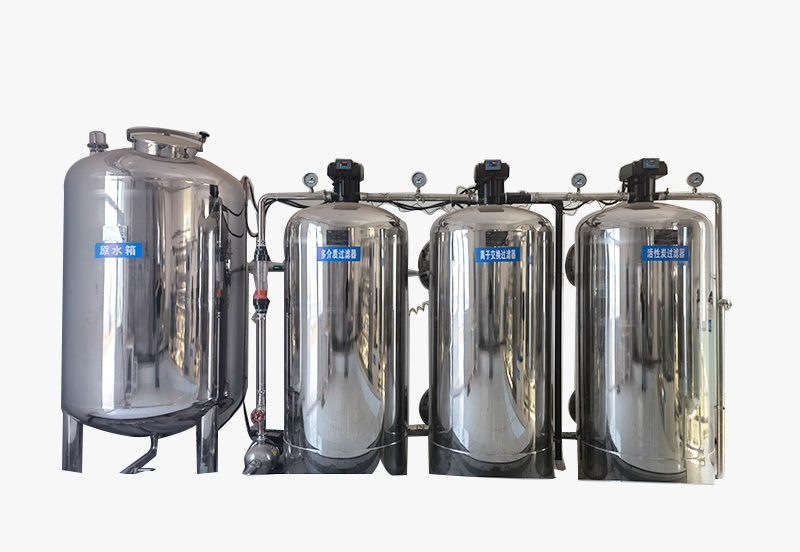
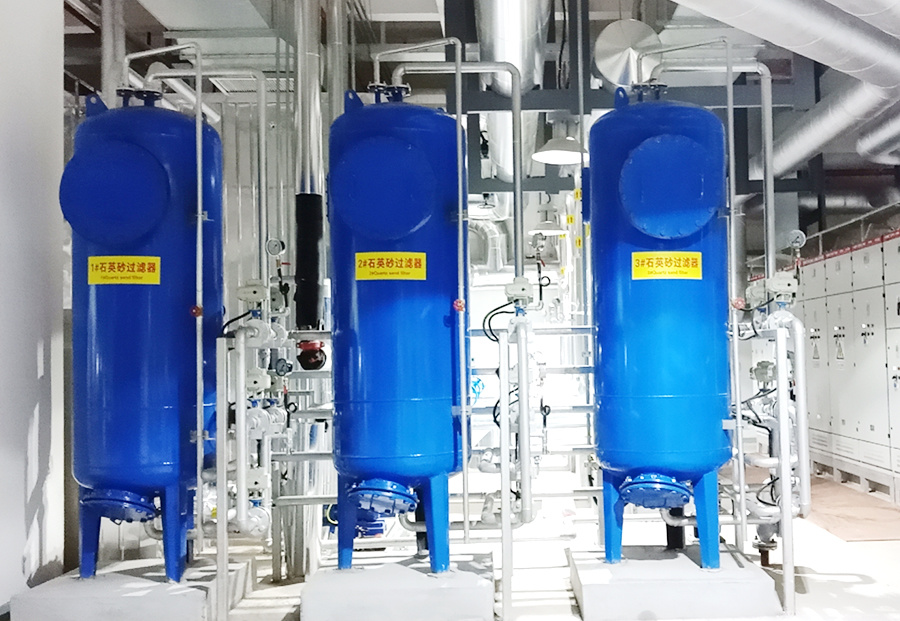
The pretreatment technologies for reverse osmosis mainly include: multimedia filtration, activated carbon filtration, security filtration, microfiltration or ultrafiltration, etc. Using microfiltration or ultrafiltration as the pretreatment system is more efficient compared to other methods.
The reverse osmosis unit itself determines the type of membrane element used according to the water quality of the raw water, and according to the requirements for water production and water quality, determines the number of membrane elements, the arrangement of membrane modules, and parameters such as the recovery rate and desalination rate of the reverse osmosis unit. Generally, reverse osmosis systems are segmented, including single-stage single-stage, single-stage multi-stage; multi-stage, usually two-stage multi-stage.
Tags:
-- Recommended --


Shijiazhuang Tianwang Environmental Protection Technology Co., Ltd.
Shijiazhuang Tianwang Environmental Protection Technology Co., Ltd. is a high-tech enterprise specializing in the research and development, manufacturing and sales of water treatment equipment.
Contact Information
Production address: No. 9, Fengchan Road, Economic and Technological Development Zone, Shijiazhuang City
Office Address: 25th Floor, Block C, No. 310 Changjiang Avenue, Shijiazhuang High-tech Development Zone
Contact Number:
0311-89272359 0311-68039237
Enterprise Email:
twhbkj@163.com
Website: en.sjztwhb.com