

Introduction to the principles and characteristics of multimedia filters
Category:
Time of issue:2021-03-20
Introduction to the principle and characteristics of multimedia filters:
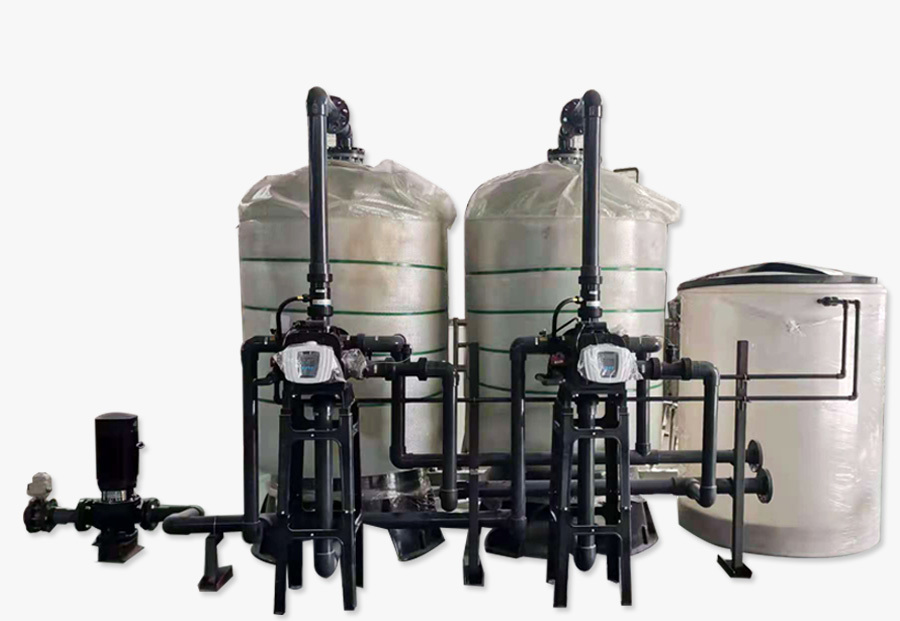
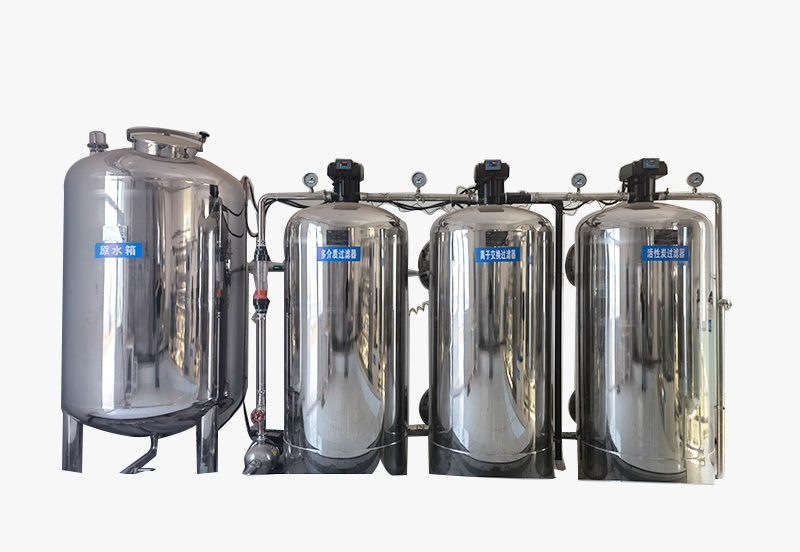
A typical multimedia filter uses a layered bed of anthracite, sand, crushed garnet, or other materials.
The equipment is pressure-type. The principle is that when raw water flows down through the filter media, suspended matter in the water is retained on the filter layer surface due to adsorption and mechanical resistance. When water flows into the middle of the filter layer, because the sand particles in the filter layer are more closely arranged, the particles in the water have more opportunities to collide with the sand particles. Therefore, the flocculants, suspended matter, and sand particles on the surface adhere to each other, and the impurities in the water are retained in the filter layer, resulting in clarified water quality. The suspended solids in the filtered effluent can be below 5 mg/L.
Characteristics
1. Multimedia filters are widely used in water treatment processes. They can be used independently, but are mostly used as pre-filtration for deep water treatment.
2. Multimedia filters are commonly used pre-treatment devices for deep purification of water quality, and different filter media can be added according to process requirements.
3. Multimedia filter materials can be fiberglass reinforced plastic, A3 steel anti-corrosion or lined rubber, or all stainless steel. The operation methods include fully automatic and manual types. Automatic control uses imported automatic controllers and pneumatic/hydraulic valve control from the United States. It is easy to operate and maintain, and is widely used in pre-treatment devices in various water treatment processes.
4. The filter materials of multimedia filters should have sufficient chemical stability, and the relative density and particle size of each medium should have certain differences. The relative density of anthracite used in double-layer filter filters composed of anthracite and quartz sand is 1.4-1.6, and the particle size is 0.8-1.8 mm. The relative density of quartz sand is 2.6-2.65, and the particle size is 0.5-1.2 mm; In addition to the above two filter materials, three-layer filter filters can also use heavy minerals such as manganese sand and magnetite, with a relative density of 4.7-5.0 and a particle size of 0.5-4 mm.

Working principle of quartz sand filter
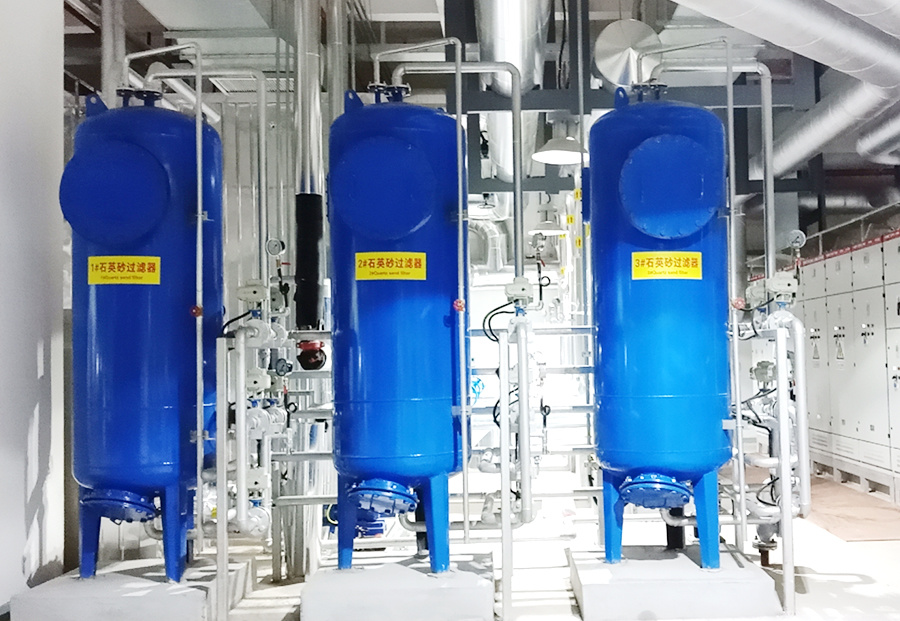
Quartz sand filters use quartz sand as the filter medium. Under a certain pressure, water with higher turbidity is filtered through a certain thickness of granular or non-granular quartz sand, which can effectively intercept and remove suspended matter, organic matter, colloidal particles, microorganisms, chlorine, odor, and some heavy metal ions in the water, ultimately achieving the effect of reducing water turbidity and purifying water quality. This is a highly efficient filtration equipment.
Quartz sand filters are generally used as pre-treatment for reverse osmosis equipment and ultrafiltration equipment, mainly for intercepting and adsorbing mud, colloids, metal ions, and organic matter. Commonly used filter media include quartz sand, activated carbon, anthracite, and manganese sand.
Working principle
Quartz sand filters utilize one or more filter media, operate at room temperature, are acid and alkali resistant, and are oxidation resistant, with a pH range of 2-13. The system is equipped with complete protection devices and monitoring instruments, and has a backwashing function. Sludge and other pollutants are quickly washed away, water consumption is low, and full automatic function can be set according to user requirements. Under a certain pressure, the original liquid passes through the medium for flocculation, adsorption, and interception to remove impurities, thereby achieving the purpose of filtration. The filling material is generally: quartz sand, anthracite, granular porous ceramics, manganese sand, etc., users can choose according to the actual situation.
Product characteristics
1. Compact structure: This equipment integrates coagulation reaction, filtration, and continuous cleaning. It simplifies the water treatment process, occupies a small area, has a simple structure, and is flexible and convenient to install and operate. It reduces the energy consumption and manual management costs of multi-stage raw water treatment processes and reduces the difficulty of operation.
2. Significant coagulation reaction effect: Applying the coagulation reaction mechanism and sedimentation mechanism, it effectively removes suspended matter and colloidal substances in the water, which is conducive to further reducing the effluent turbidity in the sand filtration area.
3. Continuous self-cleaning filtration: The filter medium automatically circulates and continuously cleans without the need for shutdown backwashing.
4. Reduce the content of suspended solids (SS) in raw water: In combination with a micro-coagulation device, various industrial water, municipal sewage, and industrial water with an influent SS ≤ mg/L are used as recycled water, with a removal rate ≥90%, achieving perfect filtration effect.
5. Special selected materials, long service life.
Tags:
Previous
Previous:
-- Recommended --


Shijiazhuang Tianwang Environmental Protection Technology Co., Ltd.
Shijiazhuang Tianwang Environmental Protection Technology Co., Ltd. is a high-tech enterprise specializing in the research and development, manufacturing and sales of water treatment equipment.
Contact Information
Production address: No. 9, Fengchan Road, Economic and Technological Development Zone, Shijiazhuang City
Office Address: 25th Floor, Block C, No. 310 Changjiang Avenue, Shijiazhuang High-tech Development Zone
Contact Number:
0311-89272359 0311-68039237
Enterprise Email:
twhbkj@163.com
Website: en.sjztwhb.com