
Treatment methods for declining performance of RO reverse osmosis membranes
Category:
Time of issue:2020-02-27
【 Summary Description 】The main reason for the performance degradation of general RO reverse osmosis membranes is membrane surface fouling, such as scaling, pore blockage, or physicochemical changes.
The main reason for the performance degradation of general RO reverse osmosis membranes is membrane surface contamination, such as scaling, pore blockage, or physicochemical changes. Physical changes are due to compaction effects that reduce the water permeability of the reverse osmosis membrane. Chemical changes are mainly caused by fluctuations in pH value, such as hydrolysis of cellulose acetate membranes, and free chlorine can also reduce the performance of aromatic polyamide membranes. Pore blockage of reverse osmosis membranes is mainly caused by surface deposition and microbial growth. Microorganisms not only block membrane pores but also cause erosion damage to cellulose acetate.
A certain amount of residual chlorine (0.1~0.5mg/L) must be maintained in the RO reverse osmosis membrane, while the residual chlorine before the aromatic polyamide membrane should be less than 0.1mg/L. Cleaning and treatment of RO reverse osmosis membranes is a delicate and tedious task. Currently, the quality of domestic membranes is not high enough, and frequent cleaning can easily damage the membranes. To reduce cleaning work, pretreatment must be done well, and water quality must be strictly controlled; otherwise, there will be "endless troubles".
The method for treating RO reverse osmosis membranes is: regularly clean with a 0.1% formaldehyde solution for at least 1 hour. Contaminated membranes should be cleaned with a 2% ammonium citrate solution (PH=4~8), or sodium bisulfite, sodium hexametaphosphate, dilute hydrochloric acid, etc., to prevent scaling of manganese, iron, and carbonates. Sometimes, enzymatic detergents are also used to clean organic matter. Cleaning pressure 0.34~0.98MPa (3.5~10kgf/cm2), cleaning flow rate is 2~3 times the original water treatment flow rate.

How to debug daily reverse osmosis equipment
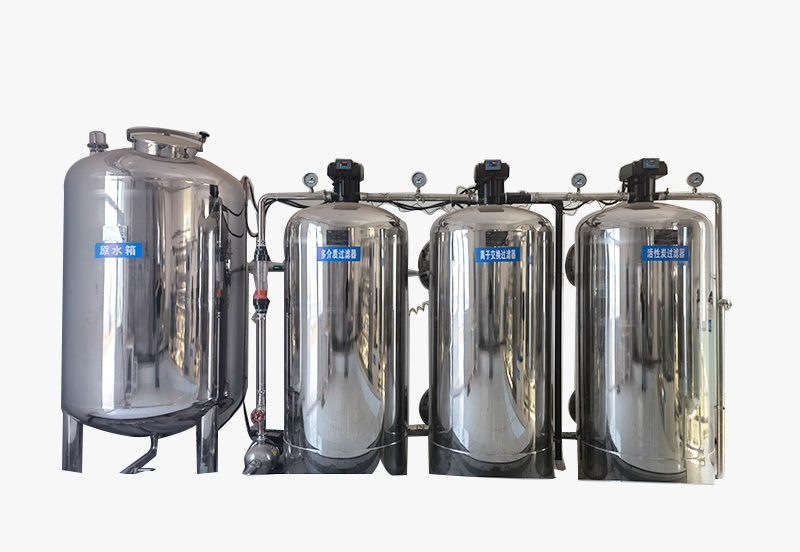
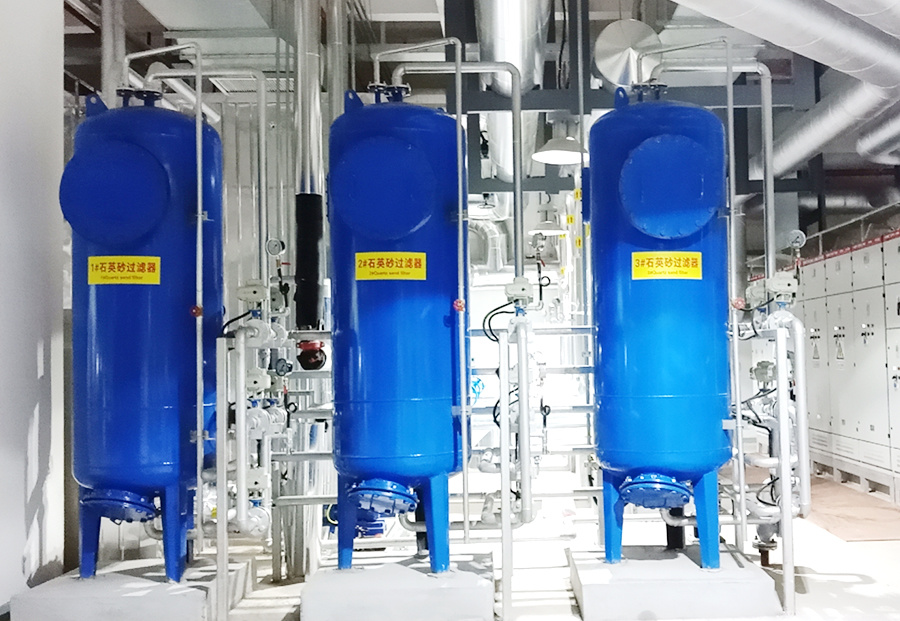
Reverse osmosis equipment is divided into two parts: pretreatment debugging and reverse osmosis host debugging. Pretreatment mainly involves the forward and reverse washing of quartz sand and activated carbon to remove fine sand, carbon, and impurities, and control the water inflow. Reverse osmosis host debugging mainly involves adjusting the inflow and outflow and pressure. The following describes how to debug daily reverse osmosis equipment?
1. Analyze and test the incoming water of the device. If the results show that it meets the incoming water requirements, the device can be commissioned.
2. Adjust the pressure control system of the high-pressure pump.
3. Check whether all pipe connections of the device are complete, whether the pressure gauges are complete, whether the low-pressure pipe connections are tight, and whether there are any shortages.
4. Fully open the pressure gauge switch, the total inlet valve, the concentrate discharge valve, and the product water discharge valve.
5. Start the pretreatment equipment and adjust the water supply to be greater than the total water inflow of the device.
6. Backwash and forward wash the sand and carbon filters until the effluent is clear.
7. Start the high-pressure pump and slowly open the total inlet valve of the device. Control the total inlet pressure of the device to be less than 0.5Mpa, rinse for 5 minutes, and check whether various high and low-pressure pipelines and instruments are normal.
8. Adjust the inlet valve and concentrate discharge valve to make the inlet pressure reach 1.0~1.4Mpa.
9. Detect the conductivity of the product water. When it meets the requirements, open the product water outlet valve and close the product water discharge valve.
10. The debugging of the RO device is all manual single-step commissioning. After normal operation, it can be switched to automatic state, and the operation is automatically controlled by online instruments and PLC.
11. Start the regeneration system to see if the regeneration system is working properly.
The most important thing to pay attention to during reverse osmosis debugging is: never turn on the high-pressure pump while the outlet valve is closed, as this will cause great damage. Therefore, during debugging, you must pay attention to whether the pipeline is in the same path before starting the water pump.
Tags:
-- Recommended --


Shijiazhuang Tianwang Environmental Protection Technology Co., Ltd.
Shijiazhuang Tianwang Environmental Protection Technology Co., Ltd. is a high-tech enterprise specializing in the research and development, manufacturing and sales of water treatment equipment.
Contact Information
Production address: No. 9, Fengchan Road, Economic and Technological Development Zone, Shijiazhuang City
Office Address: 25th Floor, Block C, No. 310 Changjiang Avenue, Shijiazhuang High-tech Development Zone
Contact Number:
0311-89272359 0311-68039237
Enterprise Email:
twhbkj@163.com
Website: en.sjztwhb.com