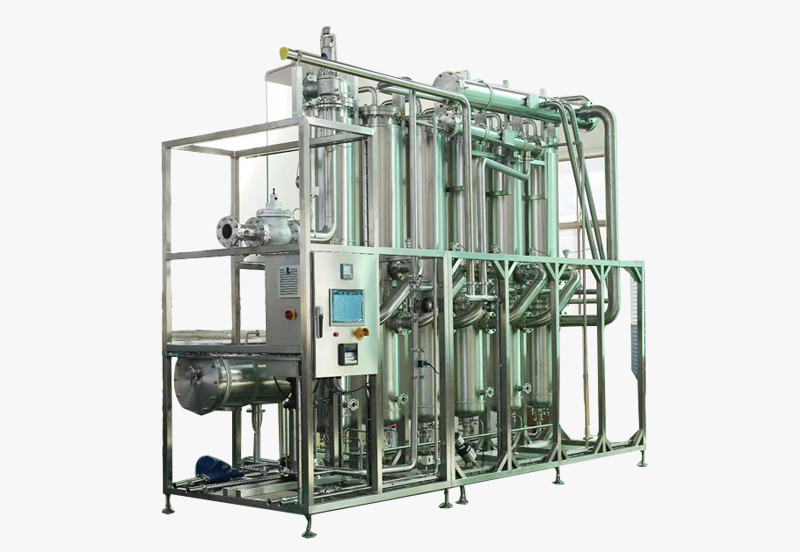
Details of a small reverse osmosis water purifier
Category:
Time of issue:2020-07-07
Introduction to Reverse Osmosis Water Purifier
A reverse osmosis water purifier is a device that integrates microfiltration, adsorption, ultrafiltration, reverse osmosis, ultraviolet sterilization, and ultra-purification technologies to directly convert tap water into ultrapure water. The core component of a reverse osmosis water purifier is the reverse osmosis (RO) membrane. The pure water produced by a reverse osmosis water purifier is fresher, more hygienic, and safer than bottled water.
I. Features
1. Uses a reverse osmosis membrane (RO membrane), employing the most advanced reverse osmosis technology internationally to produce pure water;
2. Five-stage filtration, comprehensively utilizing the effective functions of each filter element, removing mud, suspended solids, colloids, organic matter, heavy metals, soluble solids, bacteria, viruses, pyrogens, and other harmful substances from the raw water, leaving only water molecules and dissolved oxygen;
3. Uses imported brand-name quiet high-pressure pumps, with a long service life and reliable operation;
4. The pretreatment filter element is replaceable, effectively ensuring pretreatment efficiency, convenient replacement, economical filter replacement cost, and low water production operating cost;
5. Has the function of a high-pressure osmosis membrane, which can effectively extend the life of the RO membrane;
6. Automatic control of the water production process, the machine stops when there is a lack of raw water, and the machine stops when the water storage tank is full.
II. Application Scope
1. Pretreatment
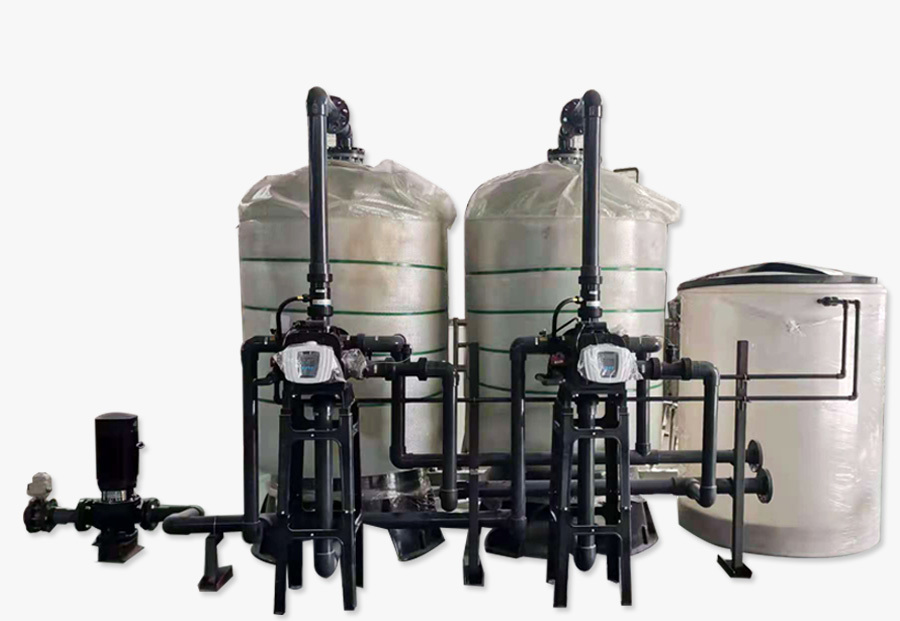
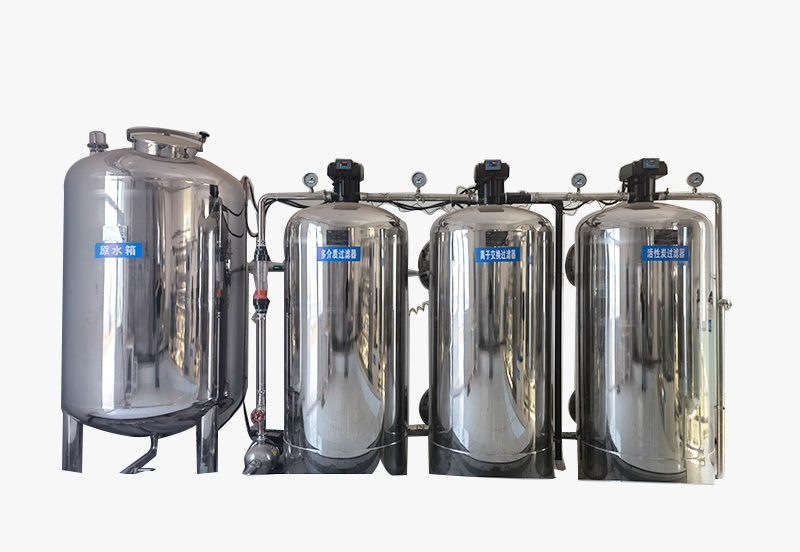
Including: raw water tank, raw water pump, multimedia filter, softener, etc.
Mainly solves the following problems:
( 1) Prevent organic matter pollution;
( 2) Prevent clogging by colloids and suspended solid particles;
( 3) Prevent oxidative damage to the membrane by oxidizing substances; This ensures stable operation and normal service life of the reverse osmosis device.
( 4) Prevent scaling of the reverse osmosis membrane surface, such as CaCO3, CaSO4, SrSO4, CaF2, SiO2, iron, and aluminum oxides, from depositing on the membrane surface
2. Production of ultrapure water
Semiconductors, electroplating plant water, laboratory and medical water, dye water, optical manufacturing water, beverages, food, electronics, hardware, pharmaceuticals, chemicals, and other enterprises that require pure water and ultrapure water.
3. Domestic ultrapure water
Because it can remove various harmful impurities from the water, with high efficiency and thorough removal, RO machine water is currently the safest and most reliable drinking water. Reverse osmosis water purifiers can fully meet people's daily needs.

III. Filter Types
1. Laminated type
Principle: Thin, specific plastic laminates with numerous micron-sized grooves on both sides. A series of identical laminates are pressed onto a specially designed inner support using springs and liquid pressure. When pressed together, the grooves between the laminates intersect, forming a series of filtering units of approximately 100 microns.
During filtration, water passes through the laminates from the outside. The filter laminates are tightly pressed together by the springs and liquid pressure, and impurity particles are trapped at the intersection of the laminates. The filtered water flows out of the filter. In the backwashing state, when a certain pressure difference or time is reached, the system performs a cleaning cycle, and the controller controls the valves to change the water flow direction, so that the impurities on the laminates are flushed out.
Disadvantages: Impurities are not thoroughly washed, filtration accuracy is uneven, and there is no drain port.
2. Forward-flushing pre-filter
Principle: Most use 50-100um stainless steel mesh. Under the pressure of tap water, water permeates from the inner wall of the pipe to the outer wall, and impurities such as mud, rust, and red worms are retained by the membrane pores. Opening the flushing valve flushes away the impurities retained by the stainless steel membrane with water, achieving filter cleaning.
Disadvantages: If the water quality is poor or the consumer's habits are not good, the filter element is easily clogged. Not only are smaller impurities not flushed out, but they are embedded deeper and tighter in the filter element, easily becoming secondary pollution. The shell must be opened, and the filter element must be removed and cleaned with a toothbrush.
3. Siphon pre-filter
Principle: The siphon pre-filter uses an external pressure type. Under the pressure of tap water, water permeates from the outer wall of the pipe to the inside. Impurity particles such as mud, rust, and red worms are retained by the membrane pores on the surface. When the flushing switch is opened, the water flow forms a sub-pressure around the filter element. The built-in water distributor can very effectively remove the dirt and impurities retained on the filter screen. The impurities retained on the membrane surface are flushed away by the water through the inner tube of the rain scraper. Compared with the previous two pre-filters, the cleaning effect is much better.
Disadvantages: Complex product structure, incomplete cleaning. If the water quality is poor, some impurities are embedded deeper and tighter in the filter element, eventually clogging the filter element and causing secondary pollution. Once clogged, maintenance is very difficult. Most siphon-type products have a filtration accuracy of more than 50 microns.
4. Backwashing pre-filter
Principle: Under normal working conditions, the backwashing pre-filter is an "internal pressure type." Water pressure forces water through the filter from the inside to the outside, trapping sediment, rust, and other particulate impurities. Opening the flushing valve washes away these trapped impurities. Even if the water quality is poor or the consumer doesn't flush for a long time, and it becomes clogged, don't worry. By activating the backwash switch, the piston moves to the bottom, reversing the water flow to an "external pressure type," flushing away impurities that were embedded on the filter surface and couldn't be removed by forward flushing.
IV. Filter Cartridge Introduction
First Stage: PPF Filter Cartridge
Pre-treats incoming tap water, removing sediment, suspended solids, colloids, and impurities. It has a large filtration area and dirt-holding capacity, resulting in good filtration performance and a long service life. It is also cleanable and reusable.
Second Stage: UDF Filter Cartridge
Adsorbs unpleasant tastes, odors, residual chlorine, halogenated hydrocarbons, and other harmful organic substances. KDF removes over 90% of residual chlorine, significantly extending the life of the activated carbon.
Third Stage: CTO Filter Cartridge
Deeply adsorbs unpleasant colors, odors, halogenated hydrocarbons, and other harmful organic substances, effectively improving the taste of the water. The long-life compressed activated carbon and high-dirt-holding capacity mesh structure give the filter cartridge dual filtration capabilities.
Fourth Stage: RO Reverse Osmosis Membrane
The pore size of the reverse osmosis membrane is only 0.0001 microns. A bacterium would need to shrink 4,000 times, and an infectious pathogen would need to shrink more than 200 times to pass through. Therefore, all microscopic impurities, soluble solids, bacteria, and viruses cannot penetrate the high-precision reverse osmosis membrane. Water is separated from other impurities and contaminants; harmful substances are automatically discharged from the concentrate, and pure water is stored in the pressure tank for later use.
Fifth Stage: Post-Activated Carbon Filter
Further removes odors, residual chlorine, and inhibits bacteria, preventing secondary contamination of purified water, making drinking water safer and more hygienic. Activated carbon filtration, based on the adsorption characteristics of activated carbon, is mainly used to remove pollutants from water, decolorize, filter and purify liquids and gases. It is also used in air purification, waste gas recovery (such as benzene recovery in the chemical industry), and the recovery and refining of precious metals (such as gold absorption). Activated carbon is mainly made from materials with high carbon content, such as wood, coal, nutshells, bones, and petroleum residues.
Tags:
-- Recommended --


Shijiazhuang Tianwang Environmental Protection Technology Co., Ltd.
Shijiazhuang Tianwang Environmental Protection Technology Co., Ltd. is a high-tech enterprise specializing in the research and development, manufacturing and sales of water treatment equipment.
Contact Information
Production address: No. 9, Fengchan Road, Economic and Technological Development Zone, Shijiazhuang City
Office Address: 25th Floor, Block C, No. 310 Changjiang Avenue, Shijiazhuang High-tech Development Zone
Contact Number:
0311-89272359 0311-68039237
Enterprise Email:
twhbkj@163.com
Website: en.sjztwhb.com