
How to extend the service life of reverse osmosis equipment?
Category:
Time of issue:2020-07-27
Reverse osmosis equipment pretreatment debugging
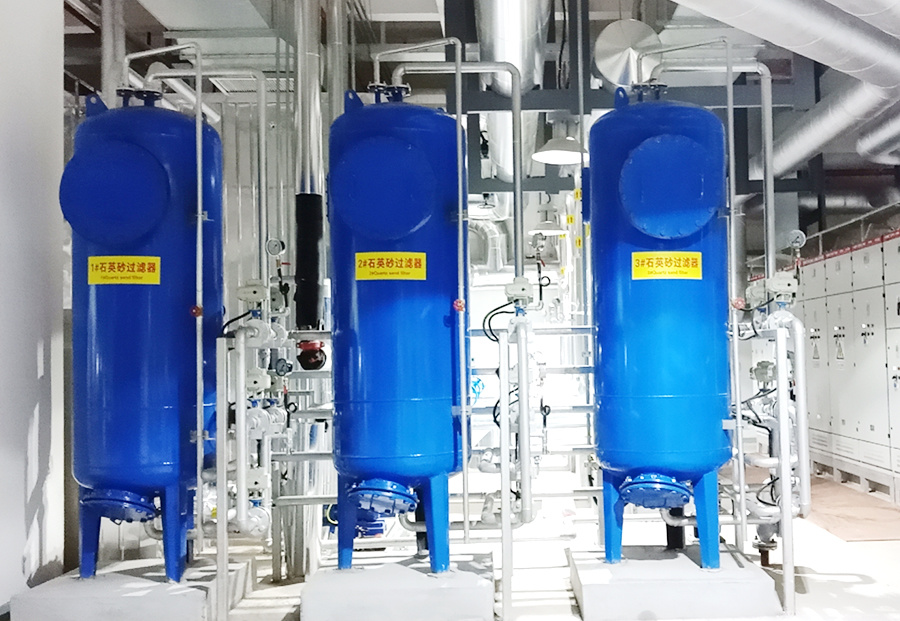
The quality of pretreatment is crucial for the stable operation of reverse osmosis equipment. When the reverse osmosis equipment uses groundwater as its feed water, pretreatment using quartz sand and activated carbon is fine, but this is not the case when using surface water.
1. Reverse osmosis equipment pretreatment chemicals
The chemicals used in the treatment process, including coagulants, flocculants, oxidants, reducing agents, scale inhibitors, etc., especially coagulants and scale inhibitors, the selection of these chemicals, the dosage, and even the drug preparation methods will have a great impact on the operation of reverse osmosis.
Usually, we pay attention to detecting the iron content of the feed water. In fact, a high aluminum content in the feed water will also cause pollution of the reverse osmosis membrane. The pollution of the membrane by aluminum is due to the precipitation of aluminum hydroxide, which usually exists in the form of colloids and is an amphoteric hydroxide. It has a very small solubility in the pH range of 6.5-6.7. If the aluminum coagulation process is carried out at too high or too low a pH value, aluminum ions will enter the reverse osmosis device and cause pollution of the reverse osmosis membrane. Therefore, for pretreatment systems using aluminum salts as coagulants, the pH value is best controlled at 6.5-6.7 to minimize the solubility of aluminum. Pay attention to adjusting the dosage according to the water quality, and if possible, regularly check the aluminum content in the pretreated water and control it below 0.05mg/L.
In order to prevent scaling on the concentrate side, we usually add scale inhibitors. Current scale inhibitors are usually a mixture of some organic acids and organic phosphates to achieve the purpose of scale inhibition and dispersion. If the selection or control is improper, these organic substances will clog the reverse osmosis membrane elements, and they will also become a breeding ground for bacteria and microorganisms, bringing greater harm to the operation of reverse osmosis.
2. Temperature
It is probably known that temperature has a great influence on the flux of reverse osmosis membrane elements. Therefore, temperature verification is necessary when calculating the water production to allow for comparison. Therefore, in places with low water temperatures in winter, heating equipment will be designed in the pretreatment system of reverse osmosis, which can effectively ensure that the reverse osmosis equipment can achieve its design output in winter.
In fact, the precipitation of SiO₂ in the membrane element is also closely related to the inlet water temperature of the reverse osmosis device. The concentration of silicon dioxide in the concentrate water cannot exceed 100mg/l at 25℃ and cannot exceed 25mg/l at 5℃. Therefore, when there is no heating equipment in the pretreatment system, it is necessary to pay close attention to the pollution of the membrane element by silicon dioxide precipitates in winter and strictly control the content of silicon dioxide in the concentrate water, which cannot exceed its solubility at that temperature.

Training of reverse osmosis equipment operators
The ability level of the operators, whether they can timely discover and correctly handle the defects and hidden dangers of the system, is an important factor affecting the operation of the reverse osmosis equipment. Misoperation by operators can cause greater harm to the system, and the damage to the membrane elements is often irreversible. The flushing work before and after restarting the reverse osmosis equipment must be done well to prevent residual gas in the equipment from running under high pressure, forming water hammer that damages the membrane, and the concentration of inorganic salts on the concentrate side of the membrane is higher than that of the raw water, which is easy to scale and pollute the membrane.
Operation and management of reverse osmosis equipment
1. Regular inspection of reverse osmosis equipment
Regularly check and replace the security filter cartridges in a timely manner to prevent leakage caused by installation or quality problems from causing particulate pollution of the reverse osmosis membrane. When the inlet pressure difference of the security filter is greater than 0.15MPa, the filter cartridge should be replaced. Generally, it should be checked once a month, and the service life of the filter cartridge should not exceed 6 months. During operation, the security filter should be frequently checked for gas to prevent air from entering.
2. Inspection of reverse osmosis membrane elements
(1) Generally, every six months (the time can be shortened if necessary), the first and second stage membrane elements of each set of reverse osmosis should be inspected.
(2) Open the pressure vessel end cover (use special tools and be operated by skilled technicians).
(3) Check the inlet section for mechanical impurities, metal oxide deposits, bacterial and microbial growth, changes in membrane element color, and scaling.
(4) If necessary, the reverse osmosis membrane element can be removed for detailed inspection. When removing the inlet end membrane element, it must not be directly pulled out. It must be pushed out of the pressure vessel in the direction of water flow, and the same applies to installation.
(5) Make detailed records after each inspection for comparison.
3. Regular calibration of various meters to ensure the accuracy and reliability of instruments.
4. Regularly analyze and statistically analyze the operating data of the reverse osmosis equipment.
Operating pressure, recovery rate (or concentrate discharge), feed water SDI (pollution index), pH, residual chlorine, and temperature are the main operating control parameters of the reverse osmosis device; desalination rate, water production, and pressure difference are the three main monitoring performance parameters. These must be strictly adhered to during operation and management, and operating conditions must not be changed arbitrarily. In particular, it is necessary to prevent increasing the recovery rate to increase water production, leading to scaling on the reverse osmosis membrane surface; to prevent continued operation when the SDI value exceeds the standard, leading to blockage of the reverse osmosis membrane; to prevent continued operation above the maximum allowable pressure difference, causing destructive damage to the membrane elements.
Tags:
-- Recommended --


Shijiazhuang Tianwang Environmental Protection Technology Co., Ltd.
Shijiazhuang Tianwang Environmental Protection Technology Co., Ltd. is a high-tech enterprise specializing in the research and development, manufacturing and sales of water treatment equipment.
Contact Information
Production address: No. 9, Fengchan Road, Economic and Technological Development Zone, Shijiazhuang City
Office Address: 25th Floor, Block C, No. 310 Changjiang Avenue, Shijiazhuang High-tech Development Zone
Contact Number:
0311-89272359 0311-68039237
Enterprise Email:
twhbkj@163.com
Website: en.sjztwhb.com