

Basic knowledge of water treatment equipment installation and use
Category:
Time of issue:2020-08-24
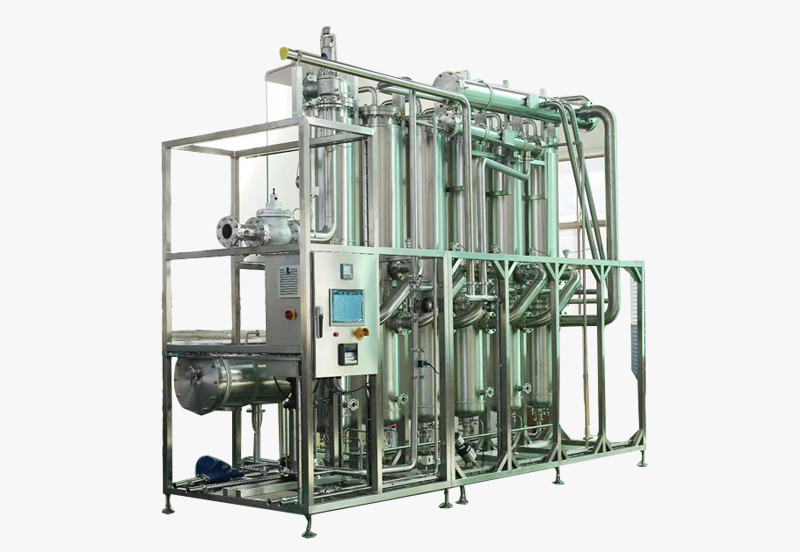
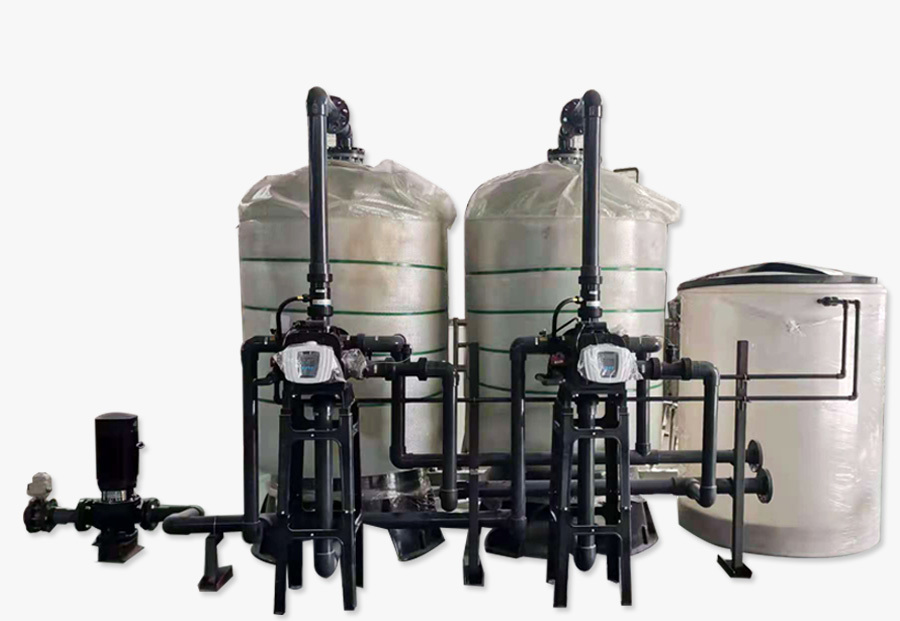
Purified water equipment, softened water equipment, and ultrapure water equipment are the most common in water treatment equipment. Softened water equipment is a water treatment device that removes Ca 、 Mg ions, etc., from water to reduce water hardness and soften water. Softened water equipment has good water quality and stable system operation, and is used by many enterprises; ultrapure water equipment has good water quality and is suitable for the production needs of various enterprises, and its application range is gradually expanding.
Basic requirements for purified water equipment effluent water quality
Purified water produced by purified water equipment is used in the pharmaceutical and biomedical industries. But what are the basic standards for purified water quality? ? Both the Chinese Pharmacopoeia and the European Pharmacopoeia clearly state that the raw water for pharmaceutical water must at least meet the standards for drinking water. If it does not meet the standards, it must be pre-treated until it meets the standards.
In addition to Escherichia coli, which has clear regulations, other bacteria are not allowed to exceed 100 个 /ml . During the process of producing water with purified water equipment, there will also be internal pollution, and various water treatment devices in the purified water equipment may become pollution sources. Therefore, it is necessary to regularly clean and disinfect the purified water equipment. In addition, a sterilization and disinfection device should be installed at the end of the purified water equipment.
Characteristics of purified water equipment effluent water quality
The effluent water quality of purified water equipment meets national hygiene standards and the actual production standards of enterprises. The effluent of purified water equipment - purified water has two characteristics. One characteristic is that the number of disinfection and sterilization equipment installed in purified water equipment is gradually increasing.
Another characteristic is that the pipeline distribution system of purified water equipment is replaced by a circulating pipeline instead of the traditional water supply pipeline. These two characteristics are to control microbial contamination and the increase of bacterial endotoxins. At the same time, attention should be paid to the influence of the flow rate in the pipe on the reproduction of microorganisms, that is, if the flow rate in the pipe is too low or blocked, it may cause the reproduction of microorganisms to increase, affecting the water quality.
Key points for selecting the installation location of softened water equipment
1 、Softened water equipment should be placed as close as possible to the drainage point.
2 、If other water treatment equipment is needed, the installation location should be reserved.
3 、Because salt is frequently added to the salt tank, a salt placement location should be set.
4 、Do not install softened water equipment within 3 meters of the boiler, otherwise hot water will flow back into the softened water equipment, causing damage.
5 、The softened water equipment should be placed in an environment with a room temperature below 1 ° C and above 49 ° C 。
Precautions for using softened water equipment
After long-term use of softened water equipment, certain precautions should be followed.
1 、The inlet of the softened water equipment should be kept open during use, unless the equipment is under maintenance. If water is not needed, the outlet valve can be closed.
2 、If the effluent is unqualified due to incomplete regeneration of the softened water equipment, manual regeneration can be performed.
3 、When the softened water equipment is not used for a long time, the brine should be sucked into the tank for protection.
4 、When put back into use, just prepare the same amount of brine as normal operation, open the inlet valve first, then connect the power supply, let the equipment reset itself, and then manually regenerate it once before opening the outlet valve.
5 、If the industrial salt used is too dirty, the salt tank should be cleaned once a year to ensure the smooth progress of the salt absorption process.
Installation standards for ultrapure water equipment
1 、The equipment installation site should be chosen in a flat, clean environment, close to the power supply and water source.
2 、Do not place it near a fire source or any heating body to avoid affecting its operating efficiency due to heat.
3 、In northern areas, the equipment must not be installed outdoors to prevent the equipment from freezing and damaging the instruments and filter elements.
4 、The equipment installation location should facilitate drainage and keep the equipment's drain pipe unobstructed.
5 、The working pressure of the water pump used in the system should be ensured at 1.0-1.2Mpa to ensure that the water pump operates within its rated head range.
The working cycle of each equipment is as follows:
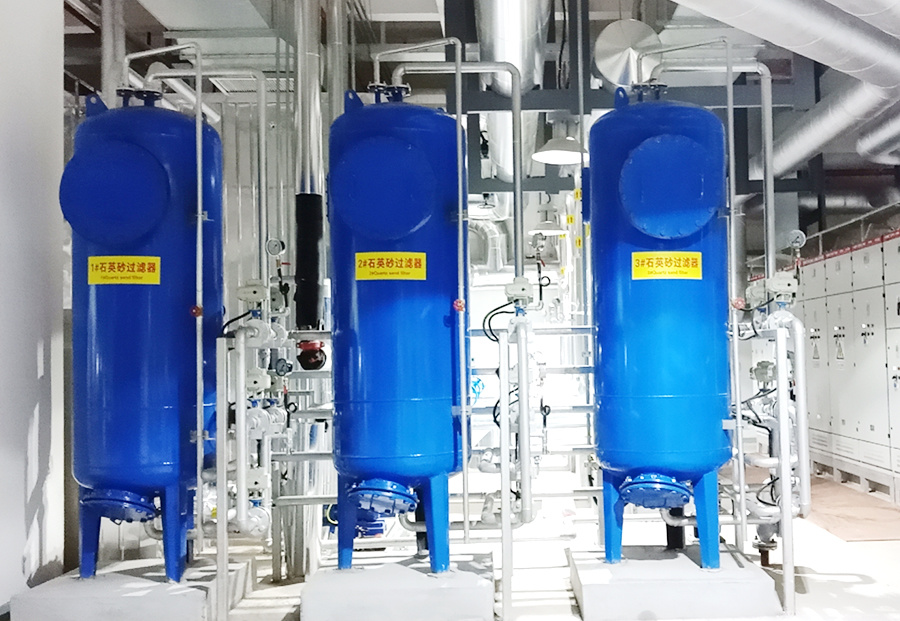
1 、Quartz sand filter
Cumulative operation 2900 hours, the quartz sand filter media should be replaced.
2 、Activated carbon adsorption filter:
When the outlet residual chlorine content > 0.1mg/L ,the activated carbon filter media should be replaced. Generally, after cumulative operation 720 hours, the activated carbon filter media should be replaced.
3 、Security filter
Generally, after cumulative operation 720 hours, the precision filter element should be replaced. When the precision filter is working and the outlet pressure < 0.04Mpa and the panel water shortage indicator light is on, the precision filter element should also be replaced.
4 、Reverse osmosis filter
Cumulative operation 240 hours, the RO membrane should be chemically cleaned once.
Cumulative operation 2900 hours, the RO membrane should be replaced.
Special Note: For your safety, please be sure to reliably ground the machine grounding wire.
Pre-treatment operation instructions
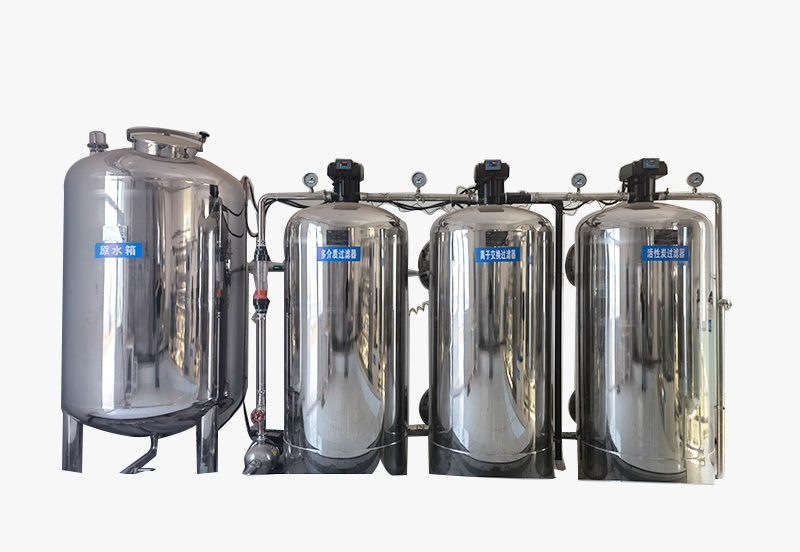
1 :Multi-media filter operation instructions:
A Place the multi-media filter in a suitable location, remove the filter top valve, and fill with coarse and fine quartz sand in a bottom-up order, then tighten the top multi-port valve.
B Turn on the water and power.
C Refer to the multi-port valve manual to backwash and forward wash the filter media in the multi-media filter until the filter water is clear, then turn the multi-port valve to the working position.
D The quartz sand must be loose-filled to ensure filtration effectiveness. (Note: It should not be bagged.)
2 Operating instructions for activated carbon adsorption filter:
A Place the activated carbon adsorption filter in a suitable location, remove the filter top valve, and fill with coarse quartz sand as a base, then fill with activated carbon, and tighten the top multi-port valve.
B Turn on the water and power.
C Refer to the multi-port valve manual to backwash and forward wash the filter media in the activated carbon adsorption filter until the filter water is clear, then turn the multi-port valve to the working position.
D The activated carbon must be loose-filled to ensure filtration effectiveness. (Note: It should not be bagged.)
3 Operating instructions for resin softening filter:
A Place the resin softening filter in a suitable location, remove the filter top softening valve, fill with cation softening resin, and tighten the top multi-port valve.
B Turn on the water and power.
C Softening filter water inlet operation:
Refer to the multi-port valve manual to backwash and forward wash the filter media in the resin softening filter until the filter water is clear, then turn the multi-port valve to the working position. Note: When the water is first introduced, the inlet valve should be opened first 1/3 position, and then slowly open the inlet valve after water comes out from the drain port of the water softener.
D Resin regeneration operation steps
Follow the steps of backwashing, salt suction, water addition, forward washing, and operation. Note that the salt tank should always maintain a level where salt is visible but not submerged, i.e., the salt solution is saturated.
Note: When backwashing and regenerating the pretreatment, please turn the raw water pump switch to the manual position. During normal operation, please turn the raw water pump switch to the automatic position for the equipment to function normally.
Equipment installation and commissioning operation steps:
1 Place the main unit and pre-processor near the water and power sources.
2 Install quartz sand, activated carbon, softening resin, and other filter materials.
3 Connect the water lines: connect the raw water pump inlet to the water source, connect the pre-filter outlet to the main unit inlet, and connect the pre-processor and main unit drain ports to the sewer with pipes.
4 Circuit: First, reliably ground the grounding wire, and connect the supplied power cord to the room's electrical control box.
5 Turn on the water and power, and operate step-by-step according to the "pre-treatment operating instructions" to complete the pre-treatment commissioning operation.
6 Using this machine, the raw water pump switch is set to the automatic position, and the stop switch is turned on. Turn on the water and power. When the pressure at the primary pump outlet reaches the set value of the pressure controller, the primary pump starts working. After the primary pump starts, adjust the system pressure Ⅰ to 1.0-1.2Mpa . For the first start-up, the primary RO membrane system should be manually flushed 30 minutes. Primary RO After the system is working normally, when the pressure at the secondary pump outlet reaches the set value of the pressure controller, the secondary pump starts working. After the secondary pump starts, adjust RO Ⅱ outlet pressure to 1.2-1.5Mpa to operate between 5 minutes later, the secondary RO recovery rate adjustment valve is opened to a certain position, and the secondary RO system is continuously flushed 30 minutes later, the RO Ⅱ outlet pressure is adjusted to 1.2Mpa-1.5Mpa between, and the secondary RO system is working normally.

Overall machine installation precautions:
1 The equipment installation site should be level, the environment clean, and close to the power and water sources.
2 Do not place near fire sources or any heating elements.
3 、In northern areas, the equipment must not be installed outdoors to prevent the equipment from freezing and damaging the instruments and filter elements.
4 、The equipment installation location should facilitate drainage and keep the equipment's drain pipe unobstructed.
( 1 )When the water source pressure < 0.12Mpa . Flow rate < 6.0T/H During operation, the machine will repeatedly start and stop the multi-stage pump. --- stop --- starting phenomenon. At this time, the machine should be stopped to prevent the motor from burning out. In areas with insufficient water pressure and flow rate, please add a raw water tank before this equipment.
( 2 )The operating pressure of the water pump used in the system should be ensured to be 1.0-1.2Mpa to ensure that the water pump operates within its rated head range.
Water production operation
1 Set the raw water pump switch on the operation panel to the automatic position, turn on the stop switch, turn on the water source, and turn on the power. When the water pressure reaches the set value of the pressure controller, the equipment will automatically start working.
2 After the entire machine enters the working state, adjust the system pressure to 1.0-1.3Mpa。
3 If the multi-stage pump is difficult to start, slightly close its outlet pressure regulating valve (but it cannot be completely closed, a certain flow rate must be left) and then open it after the multi-stage pump starts.
4 If the inlet water pressure is too low or the flow rate is insufficient, please use a raw water tank or build a water storage pool for the equipment to function normally.
Precautions during operation
1 The water production of this machine is at water temperature 25 ℃ is 2000L/H above, water temperature rises or falls 1 ℃, the water production will increase or decrease accordingly 3 % or so, this is RO determined by membrane characteristics.
2 、Entering RO The residual chlorine content in the water entering the membrane should be strictly controlled below 0.1PPm The method is: connect water to the sampling port of the adsorption filter, and detect it with a residual chlorine determination agent. If it exceeds the standard, the activated carbon filter material should be replaced.
3 、If the water inflow is insufficient or the pressure is too low, the machine's water shortage and low-pressure system will automatically shut down the equipment.
4 、When the machine is used for the first time, due to the preservative in the membrane. The water conductivity will be higher, rinse 1-2 hours and operate normally for a period of time, the water conductivity will be significantly reduced.
Note:
1 、You have chosen AC380V voltage motor, be sure to pay attention to the consistency of the motor's rotation direction with the rotation direction marked on the pump, otherwise the water pump will be damaged.
2 、When the water source is insufficient or the pressure is too low, the machine will automatically shut down and automatically start when the water source pressure is restored.
3 、Automatic flushing: The equipment starts and executes 90S time flushing, and automatically switches to water production after flushing; each startup or water-full flushing during operation 10S ; Continuous operation 3h or water-full standby 3h ,automatic intervention flushing 10S . When flushing the membrane, the system pressure drops, please do not adjust the regulating valve.
4 、During normal water production, the membrane system pressure should be between 1.0-1.3Mpa (adjusted by the regulating valve).
5 、The conductivity value displayed by the conductivity display instrument is for reference.
Maintenance
A 、Replace the activated carbon in the adsorption filter
1 、Residual chlorine will cause RO membrane decomposition, shortening RO membrane life, the residual chlorine content should be checked once a week.
2 、When the residual chlorine content exceeds 0.1PPm ,the activated carbon filter material should be replaced.
B 、Replace the precision filter element in the safety filter
1 、The filter is equipped with 5 root 5um × 20 inch precision filter element effectively blocks activated carbon particles, ensuring RO the safety of the membrane and pump, and should be replaced when blocked.
2 、When replacing, unscrew the top cover of the safety filter, remove the old filter element, and tighten the cylinder after replacing the new filter element.
Tags:
-- Recommended --


Shijiazhuang Tianwang Environmental Protection Technology Co., Ltd.
Shijiazhuang Tianwang Environmental Protection Technology Co., Ltd. is a high-tech enterprise specializing in the research and development, manufacturing and sales of water treatment equipment.
Contact Information
Production address: No. 9, Fengchan Road, Economic and Technological Development Zone, Shijiazhuang City
Office Address: 25th Floor, Block C, No. 310 Changjiang Avenue, Shijiazhuang High-tech Development Zone
Contact Number:
0311-89272359 0311-68039237
Enterprise Email:
twhbkj@163.com
Website: en.sjztwhb.com